
Software Factory Management Tools
As part of our Implementation Services, MasterSoft Colombia helps organizations select, install, configure, and deploy technology tools for managing software factory operations. Our services also include team training to support successful tool adoption and integration into software development, monitoring, and control processes.
We select software factory management tools based on each organization’s needs, operating model, established processes, and requirements for control, traceability, and management. Our goal is to improve team coordination, keep information organized, and establish monitoring mechanisms that enable organizations to evaluate software factory performance.
Standard Service Model
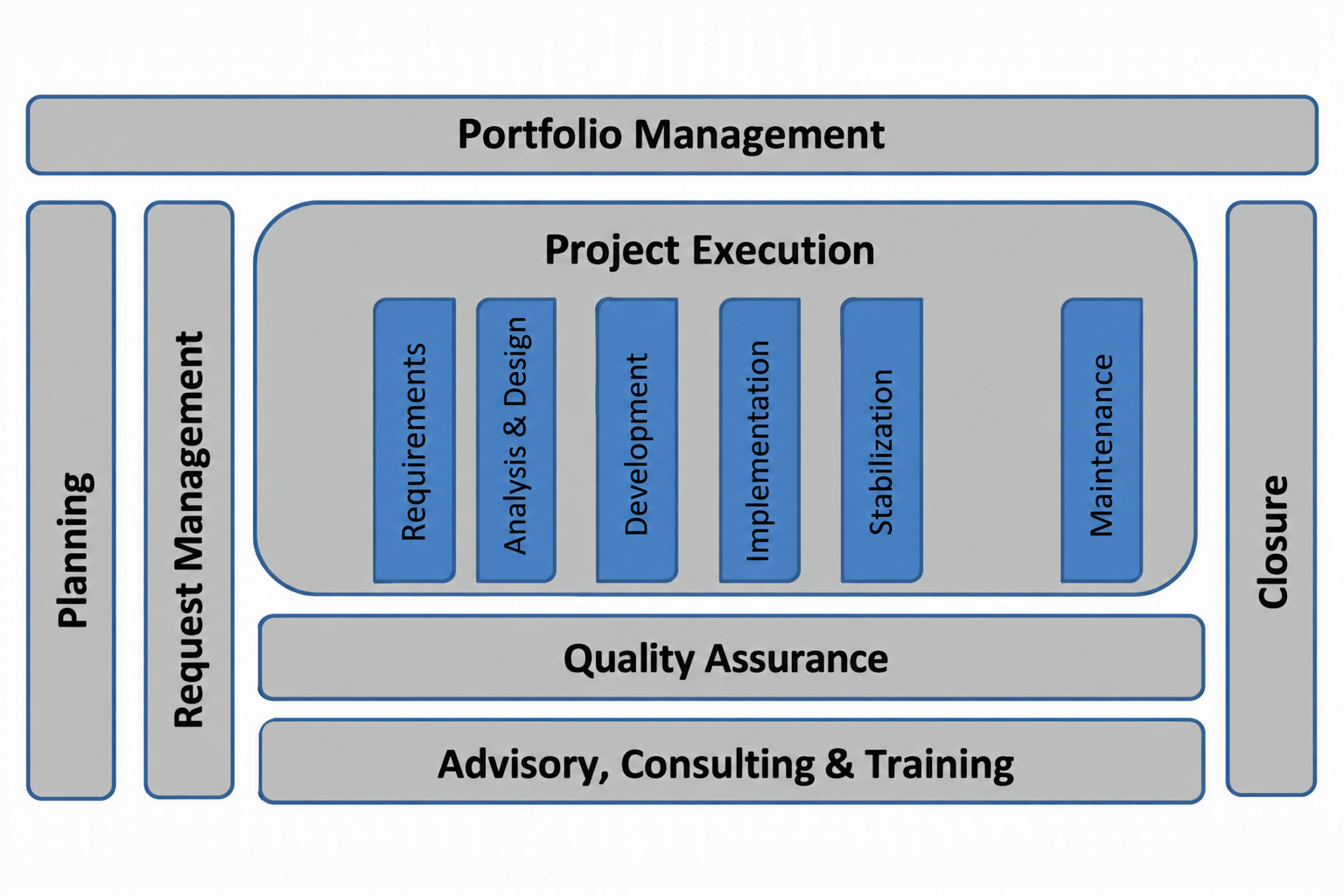
The standard operating model of a software factory integrates the processes required to manage projects from planning and request intake through execution, quality assurance, and closure. Throughout this lifecycle, advisory services, consulting, and training complement operational activities, while portfolio management provides a comprehensive view of all projects.
Based on this framework, MasterSoft Colombia recommends and implements technology tools that support requirements management, documentation, version control, defect tracking, and compliance with service level agreements (SLAs), tailoring each solution to the specific needs of the organization.
Comprehensive Software Factory Planning Model
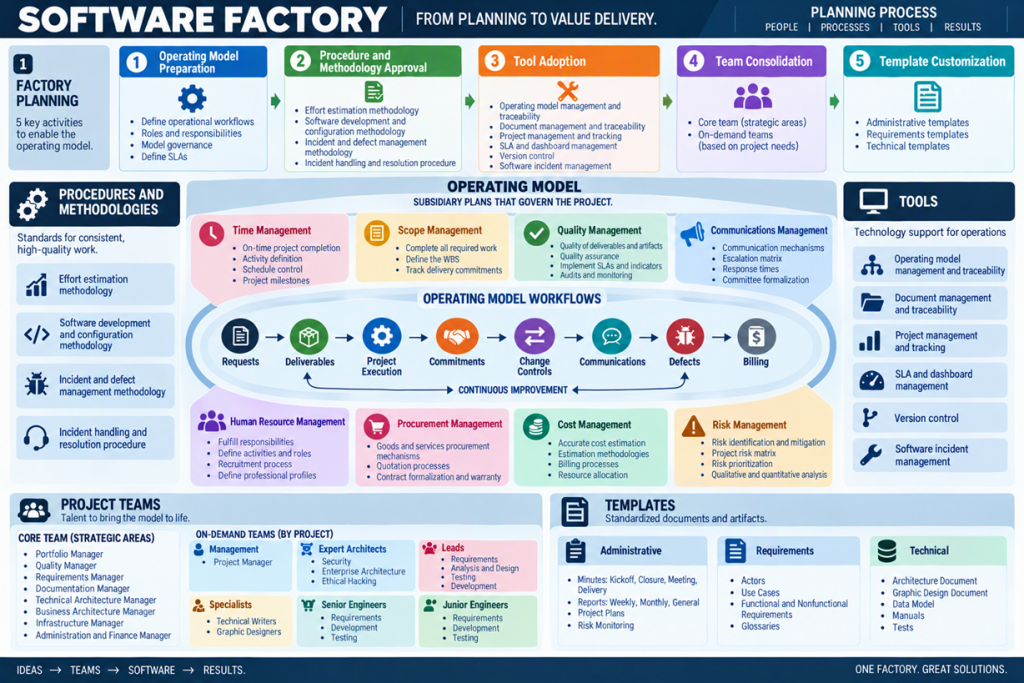
Software factory planning establishes the foundation for organizing operations, defining procedures and working methodologies, selecting and adopting technology tools, building teams, and standardizing process documentation and deliverables.
This model brings together the essential components needed to coordinate people, processes, and tools, establish monitoring and control mechanisms, and ensure operations focused on quality, meeting commitments, and continuously delivering value.
Software Request Management and Project Planning
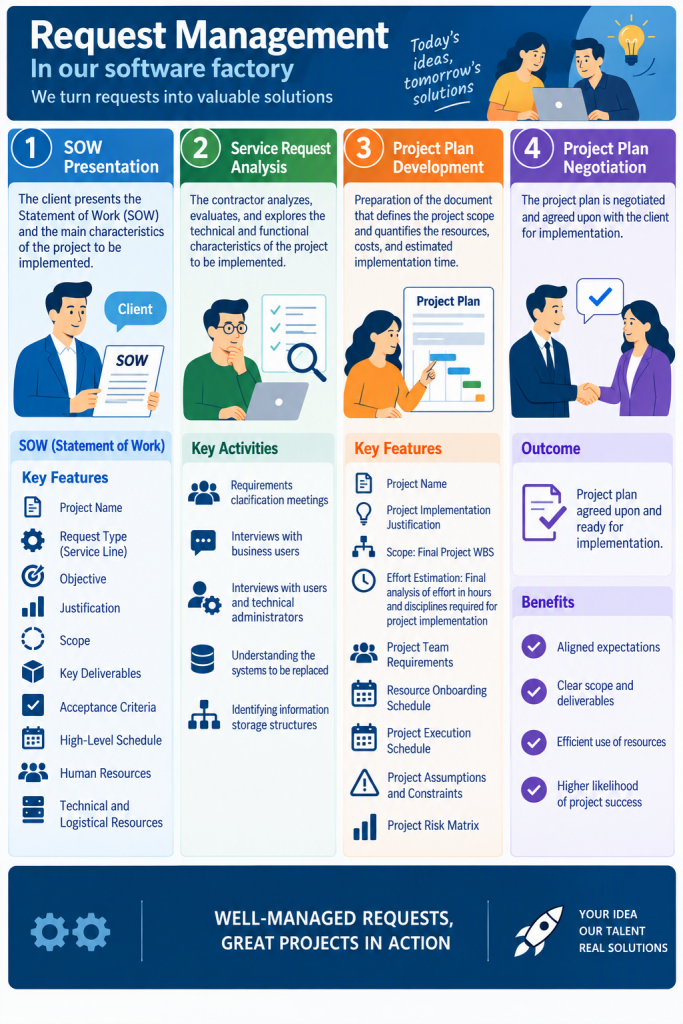
Request management transforms client needs into structured projects with a clearly defined scope, identified deliverables, estimated resources, and agreed-upon schedules.
The process includes submitting and analyzing the Statement of Work (SOW), preparing the project plan, and negotiating it with the client. It incorporates effort estimation methodologies, risk analysis, and resource planning to support informed decision-making and increase the likelihood of success for each project.
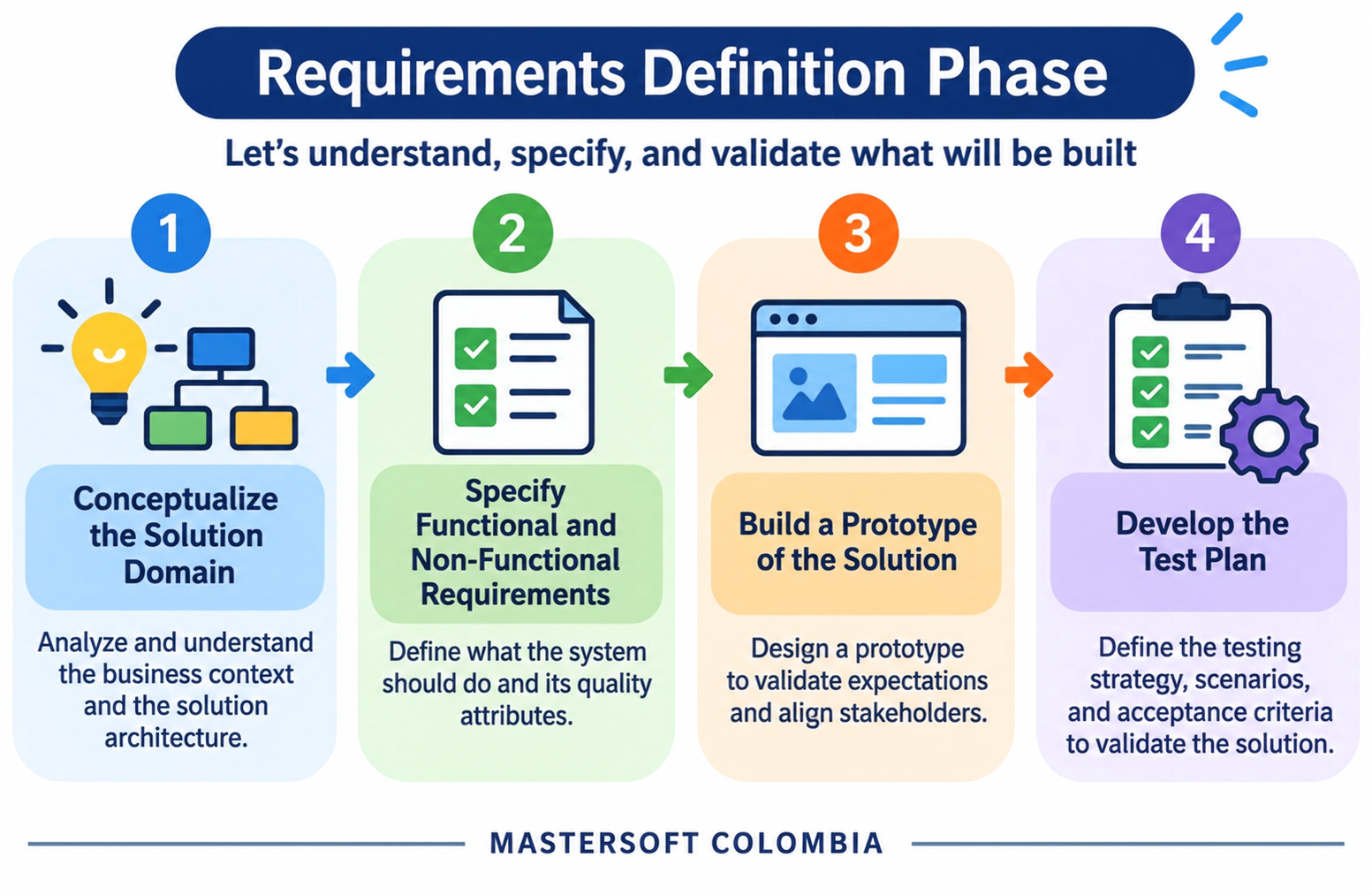
Requirements Definition: Building the Foundation for Success
The requirements definition phase is one of the most critical stages of the software development lifecycle. It helps organizations understand business needs, define the scope of the solution, and align stakeholder expectations.
During this phase, functional and non-functional requirements are identified and documented, the solution domain is conceptualized, prototypes are developed to validate the proposed solution, and a test plan is established to ensure the quality of the final product.
Thorough requirements analysis at this stage reduces risks, prevents rework, and lays the foundation for successful implementation.
Software Factory Management and Control Tools
We identify the most suitable tools for each software factory’s needs and provide support with their installation, configuration, and customization. We also train users to facilitate successful adoption and develop dashboards integrated with the implemented tools to measure compliance with service level agreements (SLAs), monitor key performance indicators (KPIs), and evaluate team and operational performance.
Project Planning and Management Tools
These software factory management tools help organizations plan project schedules, allocate resources, organize activities, control costs, and track project progress and the completion of deliverables.
OPENPROJECT
Web-based platform for planning and managing projects, scheduling activities, defining task dependencies, assigning responsibilities, and tracking tasks, milestones, and deliverables.
LIBRE PLAN
Open-source web-based tool for project planning and control, featuring activity scheduling, resource allocation, time tracking, and variance analysis.
PROJEQTOR
Comprehensive web-based project management solution for organizing activities, schedules, resources, costs, risks, quality, and progress in a collaborative environment.
LEANTIME
Open-source web platform for organizing projects, planning tasks, managing time, and visualizing progress through dashboards, schedules, and performance indicators.
Requirements Management and Development Tools
These software factory management tools help teams document and prioritize requirements, organize user stories, assign tasks, and track their implementation. They provide traceability between business needs, development activities, and the deliverables produced during each iteration.
JIRA
Enables teams to manage requirements, user stories, acceptance criteria, and development tasks, organizing priorities, assignees, statuses, and progress tracking through agile boards.
TAIGA
Supports the management of user stories, features, priorities, and tasks through Scrum and Kanban workflows, with progress tracking for each iteration.

TULEAP
Integrates requirements management, user stories, tasks, and testing, allowing teams to link project elements and maintain traceability across deliverables.
REDMINE
Enables teams to record requirements and issues as work items, set priorities, assign responsibilities, and track their statuses and change history.
Document Management and Deliverable Tracking Tools
We select and implement tools to centralize technical and administrative documentation across software factories, organize documents by project, manage version control and access permissions, and facilitate collaboration among teams.
These solutions support the management of functional and technical specifications, architecture designs, meeting minutes, user manuals, test evidence, and other project deliverables. They also establish review, approval, and access mechanisms that help keep documentation organized, up to date, and readily available throughout the entire software development lifecycle.
NEXTCLOUD
Web-based platform for storing, organizing, and sharing project documents, managing access permissions, and facilitating collaboration among software factory team members.

ALFRESCO
Enterprise content management platform for organizing document repositories, controlling access permissions, managing metadata, and overseeing the document lifecycle.

MAYAN EDMS
Open-source document management system for classifying documents, managing metadata, controlling versions, and configuring workflows for document review and approval.
LOGICALDOC
Document management solution for organizing files, streamlining searches, managing versions and permissions, and controlling access to documentation produced throughout the project lifecycle.
Defect and Incident Management and Tracking Tools
These software factory management tools enable teams to log, classify, prioritize, and assign defects and incidents, manage their resolution lifecycle, and document the solutions implemented.
They facilitate tracking assigned responsibilities, response and resolution times, outstanding issues, and recurring problems, helping organizations maintain software quality and ensure compliance with service level agreements (SLAs).

MantisBT
Enables teams to report bugs, assign responsibilities, set priorities, track issue statuses, and document fixes throughout the software development lifecycle.

BUGZILLA
Supports bug classification by product and component, assignment of responsibilities, priority management, and tracking of outstanding and resolved defects.
GLPI
Enables teams to manage incidents and service requests, assign responsibilities, set priorities, and monitor response times and compliance with service level agreements (SLAs).

ZAMMAD
Centralizes support tickets submitted by users and customers, enables assignment to support teams, and tracks their progress through resolution and closure.
Dashboards, Performance Indicators, KPIs, and SLAs
We develop customized solutions that retrieve and consolidate data from the databases of the tools used to manage software factory operations. Using this information and the business rules defined for each organization, we create key performance indicators (KPIs), performance metrics, service level agreement (SLA) compliance measurements, and interactive dashboards that support operational monitoring, performance evaluation, and informed decision-making.
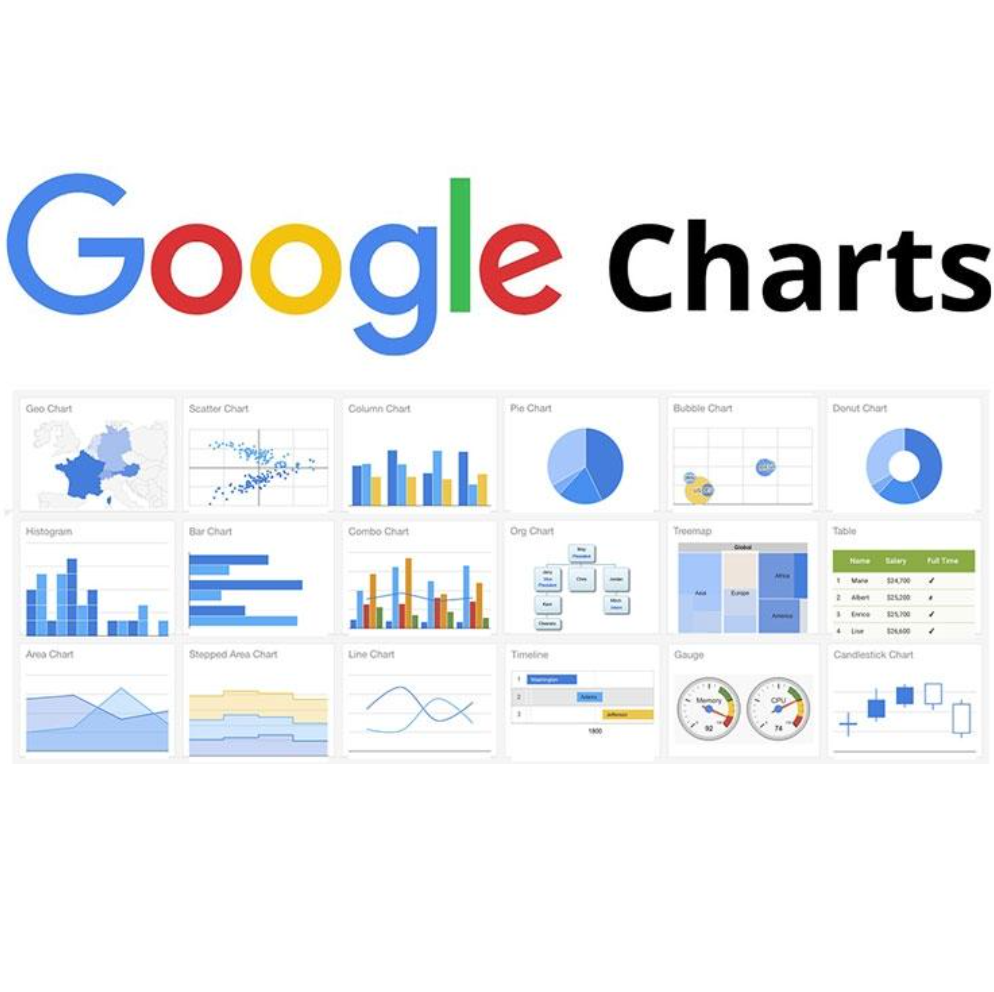
GOOGLE CHARTS
API for creating interactive charts and visualizing data in dashboards and web applications.
APACHE ECHARTS
Open-source library for creating interactive charts, performance indicators, and advanced data visualizations.

CHART.JS
Lightweight open-source library for building bar charts, line charts, and other responsive data visualizations that adapt to different screen sizes.

D3.JS
JavaScript library for creating custom data visualizations using web technologies such as SVG, HTML, and Canvas.