Mapping and Structuring Colombia’s Electoral Process
The electoral process in Colombia involves a complex system of electoral constituencies, voter registration, ballot structures, polling procedures, and vote-counting rules. In 2008, MasterSoft worked with Voting Solutions to map and document these processes, identifying the organizational and technological requirements needed to support secure, transparent, and reliable electronic voting systems.
One of the foundations of MasterSoft’s experience in analyzing the electoral process in Colombia was a project carried out for Voting Solutions in 2008. The initiative focused on documenting, analyzing, and structuring the country’s electoral procedures. It involved a detailed examination of the different stages of an election, the stakeholders involved, the information generated, and the relationships between the activities that make up the overall process.
This project provided a starting point for understanding the distinctive characteristics of Colombia’s electoral process from both a technological and a process management perspective. Building on this experience, MasterSoft has continued to expand its knowledge of the country’s electoral system, monitoring its evolution and adapting its understanding to regulatory, procedural, and technological changes over time.
The work undertaken for Voting Solutions therefore represents an important milestone in MasterSoft’s ongoing experience in this field, connecting its knowledge of electoral procedures with emerging requirements, regulations, and opportunities for technological transformation in Colombia.
The Territorial Structure of the Electoral Process in Colombia
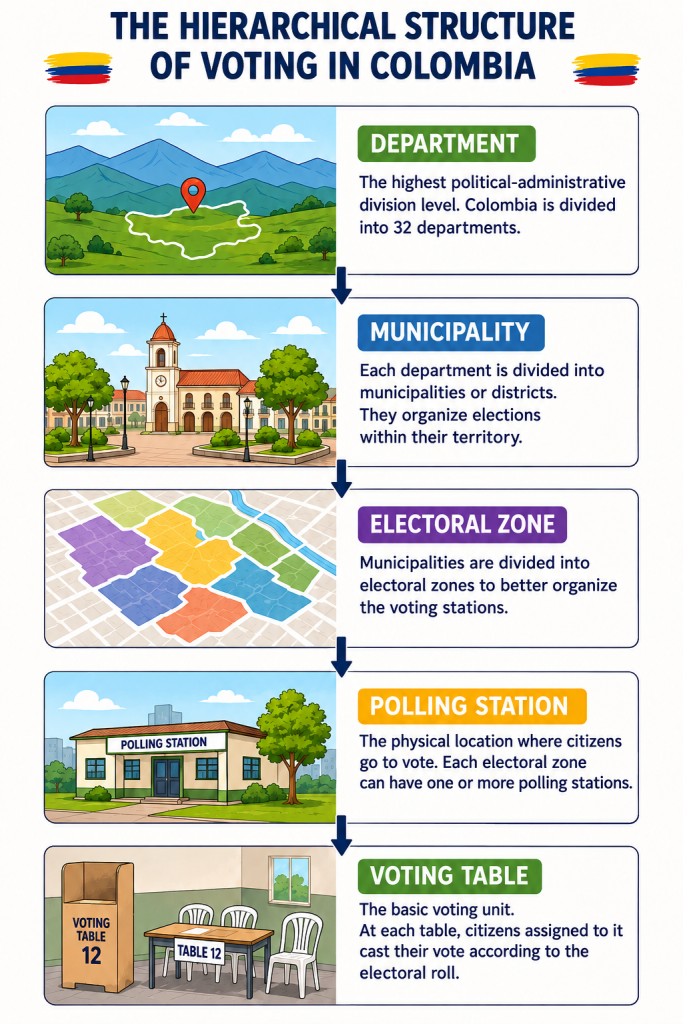
One of the first aspects to understand when analyzing an electoral process is how voting is organized geographically.
Colombia’s electoral system follows a hierarchical structure that identifies each voting location and connects it to its corresponding geographical area. This structure begins with the department and municipality, followed by the electoral zone, polling station, and voting table. The Divipole (Political-Electoral Division) uses this structure to identify and manage the country’s electoral infrastructure.
Different Types of Elections and Voting
Not all electoral processes serve the same purpose. Depending on the type of election or voting mechanism, the positions or decisions being voted on, geographical scope, electoral constituencies, candidates, and methods used to consolidate results may vary.
When analyzing electoral processes, MasterSoft recognizes this diversity as a fundamental characteristic of the electoral system. Any technological solution must be capable of accommodating different types of voting while maintaining full traceability of electoral information.
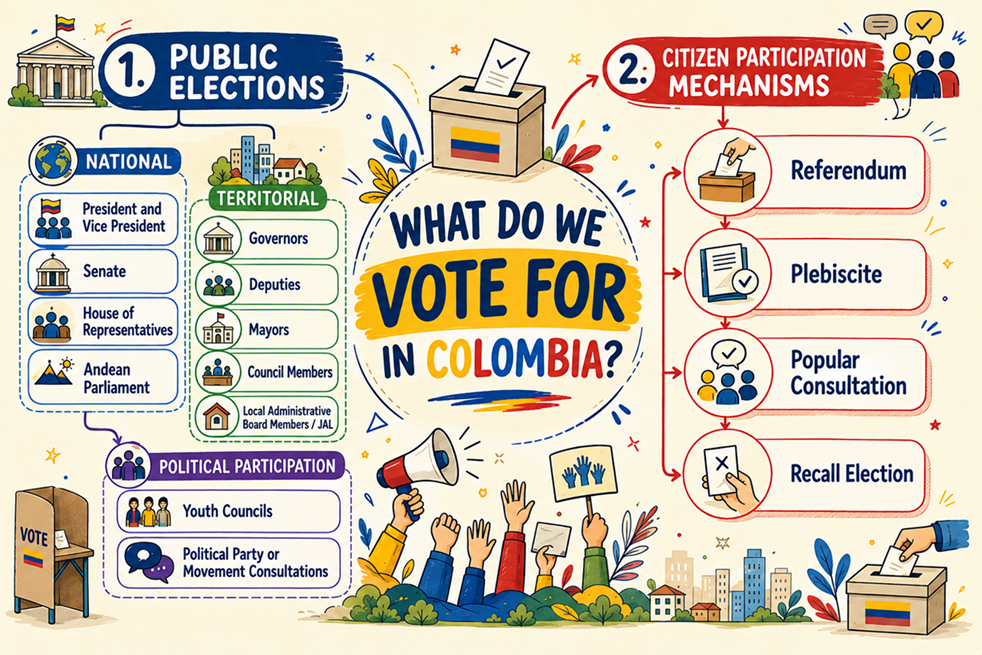
Broadly speaking, elections and voting processes in Colombia can be classified into the following categories:
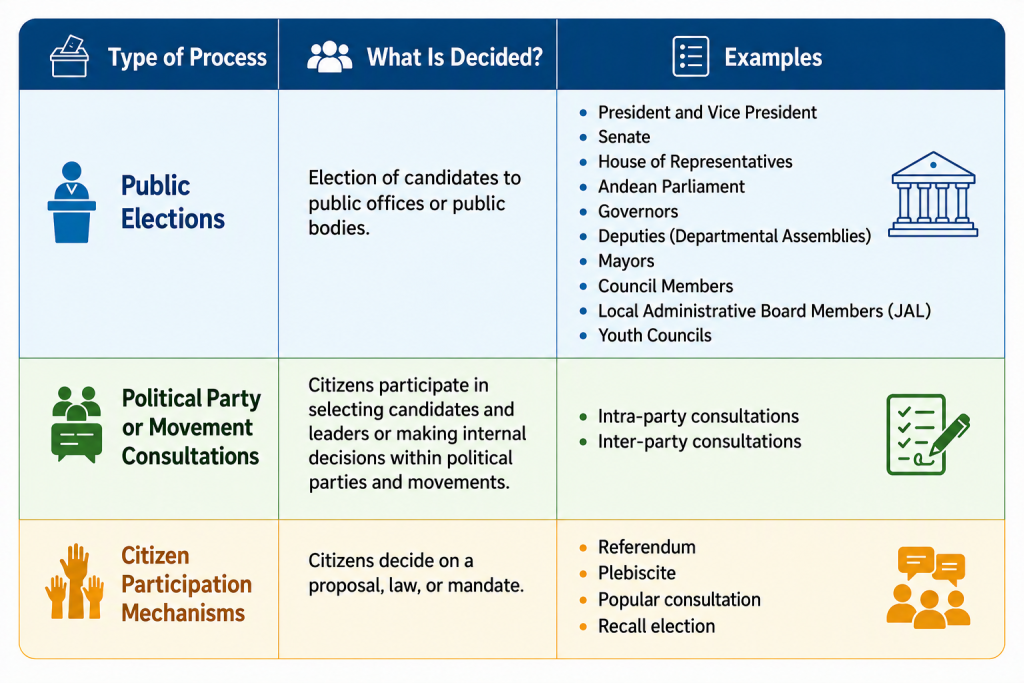
In elections for public office, the geographical scope may be national, departmental, municipal, district, or local, depending on the position or elected body. Special electoral constituencies also exist, including those representing Indigenous communities and Colombian citizens living abroad. Colombia’s National Civil Registry (Registraduría Nacional del Estado Civil) defines an electoral constituency as the territory or political division in which votes are used to determine the allocation of seats.
Citizen participation mechanisms operate differently. Rather than necessarily electing a representative, citizens vote on a question, proposal, legal provision, or whether an elected official should remain in office, depending on the mechanism involved. The National Civil Registry recognizes several such mechanisms, including referendums, plebiscites, popular consultations, and recall elections.
This distinction is particularly important from a technological perspective. An electoral system must be able to identify the type of process being conducted, its geographical scope, eligible participants, available voting options, and the rules for consolidating results.
For this reason, defining the type of election is one of the first steps in designing any technological solution intended to support an electoral process.
The diversity of electoral processes makes it essential to identify the type of election and its specific characteristics from the outset. The following infographic summarizes the main types of elections and voting mechanisms that must be considered when mapping and analyzing Colombia’s electoral process, illustrating how they are grouped according to the decisions citizens are asked to make.
Types of Electoral Candidacies
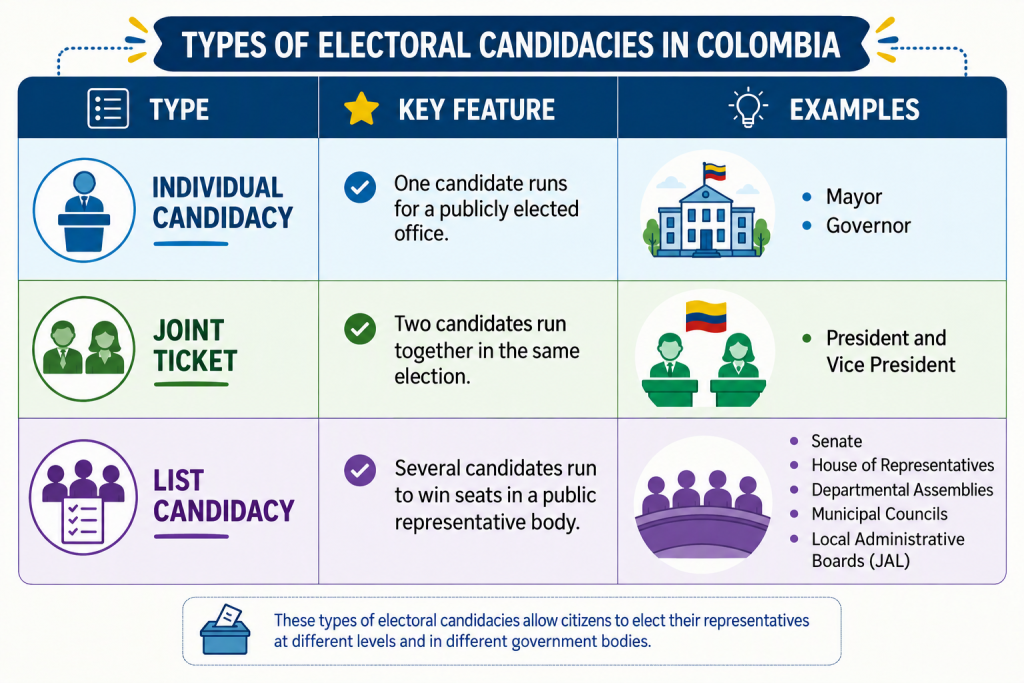
Once the type of election has been defined, the next step is to determine how voting options are presented to voters and how candidates are organized for election. This varies depending on whether voters are electing an individual officeholder, a joint ticket, or members of a representative body.
In Colombia’s electoral system, three main types of electoral candidacies can be identified:
Number of Offices or Seats to Be Filled
Once the type of election and the way candidates are presented have been defined, the next step is to determine how many offices or seats will be filled through the voting process. This number depends on the type of election, the electoral constituency, and the regulations governing each process.
In elections for single-office positions, voters elect one officeholder. Elections for representative bodies, however, may involve multiple seats, with the number varying according to the constituency and applicable electoral rules. For example, the Senate is elected through different electoral constituencies, while the House of Representatives combines territorial and special constituencies.
For this reason, the number of offices or seats should not be treated simply as a fixed value associated with a particular type of election. When structuring an electoral process, this number must be linked to the corresponding electoral constituency and the rules governing seat allocation.
The following map provides a department-by-department overview of the number of positions filled through popular elections in Colombia:
Ballot Papers
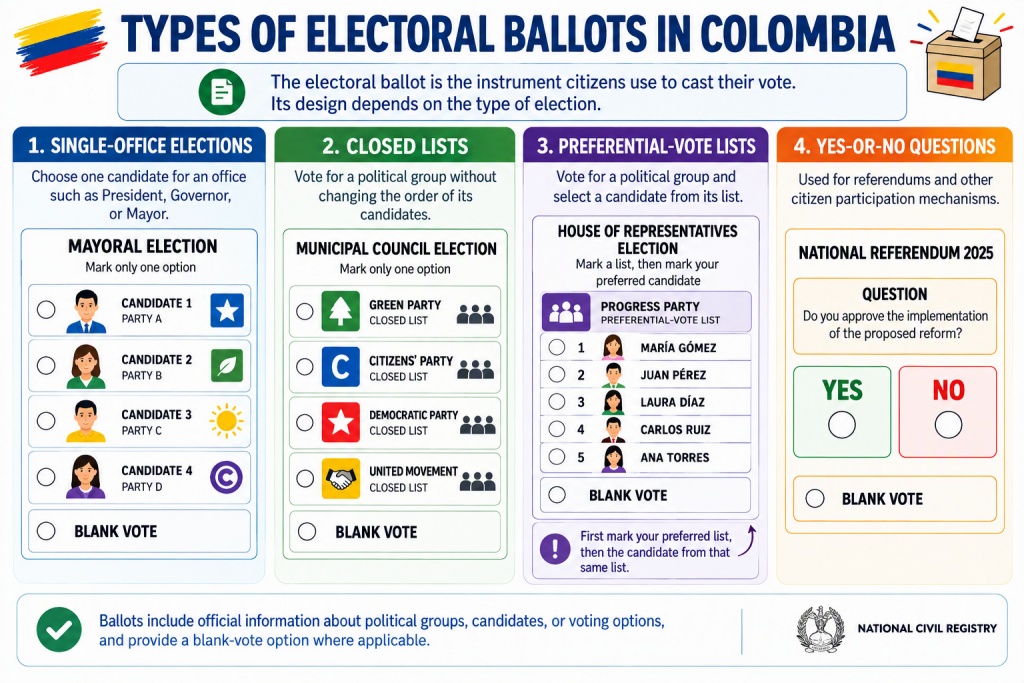
A ballot paper is the instrument through which citizens cast their votes. Its design varies depending on the type of election:
- Single-office elections: Allow voters to select one candidate, such as a President, Governor, or Mayor.
- Closed party lists: Allow voters to choose a political party or group without changing the order of its candidates.
- Open lists with preferential voting: Allow voters to select a political party or group and indicate their preferred candidate from its list.
- Yes-or-No questions: Used in referendums and other citizen participation mechanisms.
Ballot papers contain official information about political parties, candidates, or voting options and include the option to cast a blank vote where applicable.
The following infographic illustrates the main types of ballot papers used in Colombia:
Electoral Register
The electoral register is the official record of individuals eligible to vote in a particular election. It is maintained by Colombia’s National Civil Registry (Registraduría Nacional del Estado Civil) and serves as the basis for determining who is entitled to vote and where they must cast their ballot, including their assigned polling station and voting table.
The electoral register is continuously updated to include new voter registrations and remove or modify records due to circumstances such as:
- Death.
- Suspension or loss of political rights.
- Duplicate or multiple national identity documents.
- Cancellation of a national identity card.
- Changes in voter registration.
- Other circumstances affecting voting eligibility.
Voter Registration
When citizens change their place of residence and wish to vote in their new location, they must update their voter registration within the periods established by the electoral authorities.
This process requires citizens to appear in person and verify their identity, allowing them to be assigned to the appropriate polling station.
In local and regional elections, the electoral register may also include foreign nationals residing in Colombia, subject to the conditions established by law.
The Electoral Register and Electronic Voting
In an electronic voting system, the electoral register provides the foundation for determining who is eligible to vote at each voting table.
The system must check the relevant electoral register and allow only individuals authorized by the electoral authorities to cast their votes. It must also be capable of incorporating updates issued by the National Civil Registry, including changes made during election day.
The following section presents the electoral register by department, updated as of September 1, 2026.
Poll Workers
In Colombia’s electoral process, poll workers are citizens temporarily appointed to oversee voting operations at polling tables on election day. Each voting table is assigned three primary poll workers and three alternates. Serving in this role is mandatory unless an exemption applies under Colombian law.
Responsibilities
Poll workers verify voters’ identities, authorize and record votes, safeguard electoral materials, and conduct the initial vote count at their assigned table, including counting ballots, preparing official tally records, and handling any related objections.
The presiding poll worker coordinates these activities, while the vice president takes over when necessary.
El presidente de mesa coordina estas actividades y el vicepresidente lo sustituye cuando sea necesario.
Exemptions and Replacements
Colombian electoral law provides exemptions from poll worker duties under certain circumstances, including age restrictions, specific public service positions, membership in the Armed Forces, electoral candidacy, residency requirements, and situations involving force majeure.
When an appointed poll worker is unable to perform their duties, the electoral authorities arrange for a replacement in accordance with established procedures.
Poll Workers and Electronic Voting
An electronic voting system must identify and authenticate the poll workers authorized to operate each voting table, ensuring that only designated personnel can perform their assigned functions. The system must also support updates to these assignments, including replacements made during election day.
The Electoral Process in Colombia
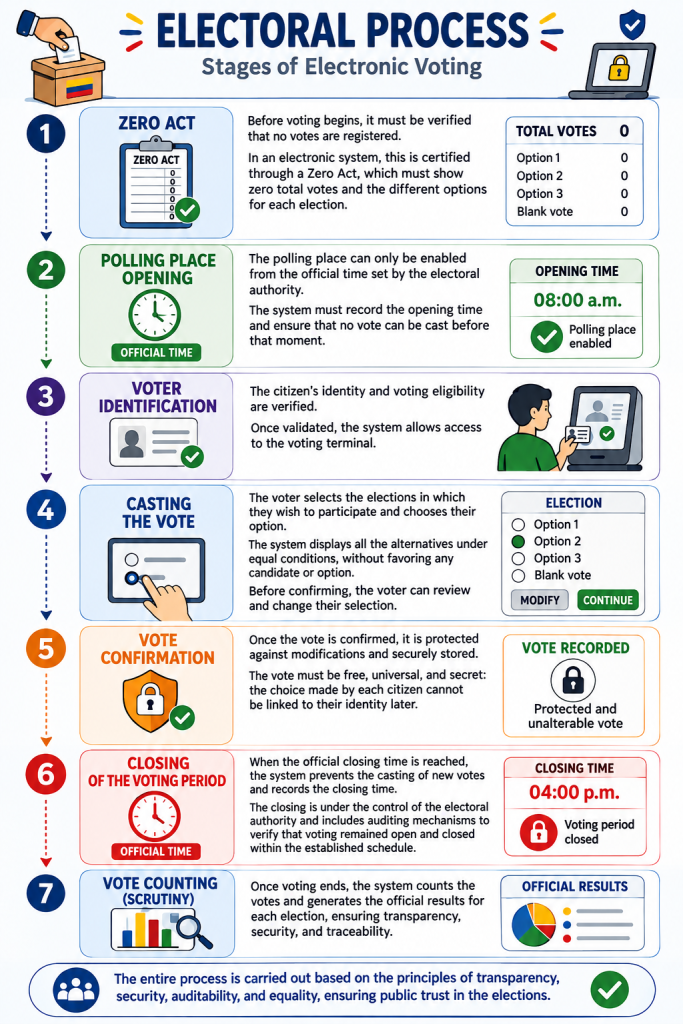
The electoral process involves several key stages: opening the polls, activating the electronic voting system, verifying voter eligibility, casting ballots, and closing the polls.
Opening the Polls
Before voting begins, election officials must verify that no votes have been recorded. In an electronic voting system, this is documented through a Zero Report (Acta Cero), which must show a vote count of zero for every election and voting option.
The polls may only open at the official time established by the electoral authorities. The system must record the opening time and ensure that no votes can be cast beforehand.
Casting a Vote
Once a voter’s identity and eligibility have been verified, the system grants access to the voting terminal.
Voters can select the elections in which they are required or wish to participate and choose their preferred voting options. The system must present all alternatives on equal terms, without favoring any candidate, political party, or voting option.
Before submitting their ballot, voters must be able to review and change their selections. Once a vote has been cast, it must be securely stored and protected against any subsequent alteration.
Fundamental Principles of Voting
Voting must be free, universal, and secret. The system must protect ballot secrecy by ensuring that voters’ choices cannot subsequently be linked to their identities.
Closing the Polls
At the official closing time, the system must prevent any further votes from being cast and record the time voting ends.
The closing process must remain under the control of the electoral authorities and include audit mechanisms to verify compliance with the officially established voting hours.
The following infographic illustrates the key stages of Colombia’s electoral process, with a particular focus on the implementation of electronic voting systems.
To learn more about our electronic voting projects and solutions, visit our Electronic Voting page, where you can explore the different voting methods and applications available to organizations.